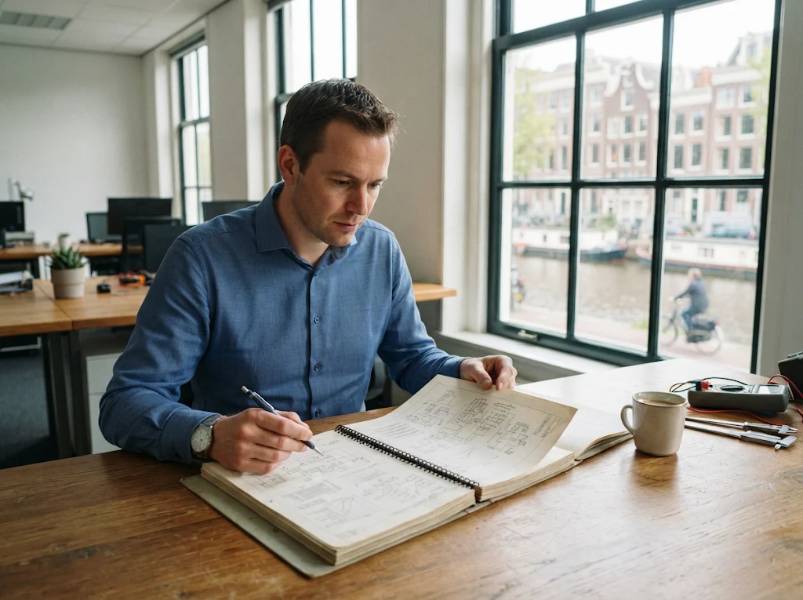
A manual is part of the product. If users cannot understand it, they will blame the machine, call support or stop using it altogether. For manufacturers who sell abroad, translating manuals well is both a legal duty and a business advantage.
Write for translation from the start
Short sentences, one idea per sentence and consistent terms make translation easier. Avoid slang, idioms and jokes.
Clear source text reduces cost and errors in every language. Treat it as an investment, not a luxury.
Use controlled vocabulary
Choose one term for each part and one verb for each action. Do not call the same part a cover, a lid and a hood in different chapters.
Controlled language lists help writers and translators keep terms consistent.
Structure information clearly
Use numbered steps for procedures, tables for specifications and separate warnings from instructions. Consistent structure helps users and translation tools.
Reuse standard blocks across manuals so identical sentences are translated only once.
Provide visuals and context
Drawings, photos and exploded views reduce text and clarify meaning. Share them with translators so they understand how parts connect.
When possible, give access to a product sample or a video demonstration.
Build a termbase with approved terms
List parts, actions and warning phrases in every language. Have engineers approve the main terms before translation starts.
The termbase becomes a shared reference for manuals, software and marketing.
Choose language partners wisely
Pick translators who know your field and the target market. A Dutch speaking engineer reads manuals differently from a general reader.
For the Netherlands and Belgium, providers of Dutch translation services can combine technical knowledge with local terminology.
Mind the language pair
Direction matters. German manuals translated into English need restructuring of long sentences, while English into Dutch needs careful use of compounds.
Our guide to German to English translation explains typical issues in a language pair that many manufacturers use.
Handle safety information with care
Warnings must be exact, visible and complete. Use the standard signal words and symbols required in each market.
Have a qualified person review all safety sentences in the target language.
Follow quality standards
Documented processes help ensure consistent results. The scope of ISO 17100 for translation services describes the steps a professional workflow should include.
Ask your providers how they apply them in practice.
Plan for layout changes
Dutch and German texts are often longer than English. Make room in templates and diagrams for text expansion.
Use flexible layouts and test each language before printing.
Translate everything the user sees
This includes labels on the product, the packaging, software menus and the quick start guide. Forgotten elements create confusion.
Make a list of all text locations early in the project.
Use translation memory for updates
Manuals evolve across product versions. A memory reuses approved text and highlights what changed.
Teams save both time and cost, and consistency improves with every release.
Test the manual with real users
Ask a few native speakers to perform a task using only the translated instructions. Watch where they hesitate.
The result shows problems that no proofreading can reveal.
Review by in country experts
Distributors and service engineers know how customers speak. Their comments catch local terms and expectations.
Make it easy for them to send corrections, and feed these back into the termbase.
Control versions and releases
Track which manual version belongs to which product version. Outdated instructions can cause accidents.
A single system for documents prevents loose files and mixed versions.
Think about digital delivery
Online manuals can include videos, search and instant updates. They also allow links to the right language automatically.
Make sure digital versions carry the same quality as printed ones.
Budget and timeline
Allow time for writing, translation, review and layout. Rushed schedules lead to compromises on the most important text.
Plan the translation phase as part of product development rather than as an afterthought.
The payoff
Good manuals reduce support calls, returns and legal risk. Customers feel respected when instructions are clear in their language.
A careful translation process is one of the cheapest ways to improve product quality.
Create a glossary of warnings
Collect all warning sentences in one list with approved translations. Reuse them across every manual and label so users meet the same words every time.
Consistency in warnings builds recognition and improves safety.
Manage supplier documents too
Parts suppliers often provide their own instructions in different languages and styles. Ask them for source files and glossaries to include in your system.
A clear policy for supplier content prevents patchwork manuals.
Archive finished manuals
Store final versions with their translations for every product generation. Service teams often need old versions years later.
A tidy archive also supports audits and legal requests.
Measure support calls by language
Track which languages generate the most questions about the manual. A spike signals an unclear section or a translation problem.
Use the data to improve the next edition.
Keep the user in mind
Behind every manual is a person with a tool in hand and a task to finish. Write and translate for that person, and the results will show in every review.